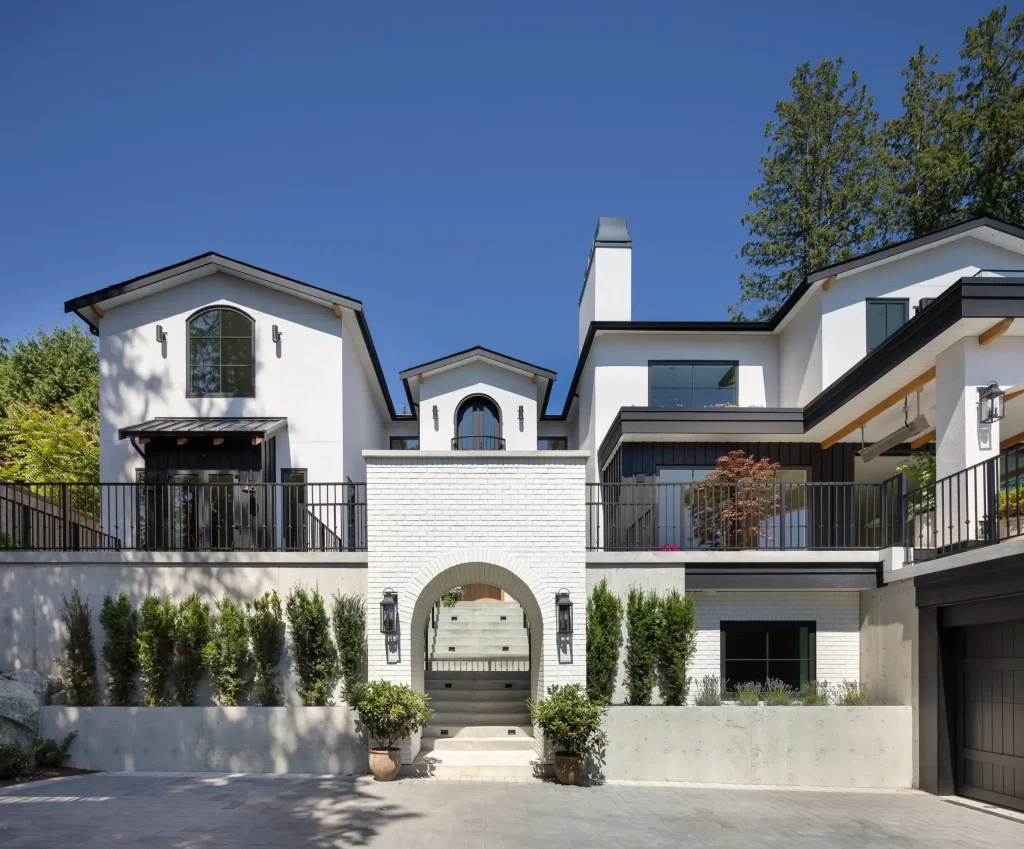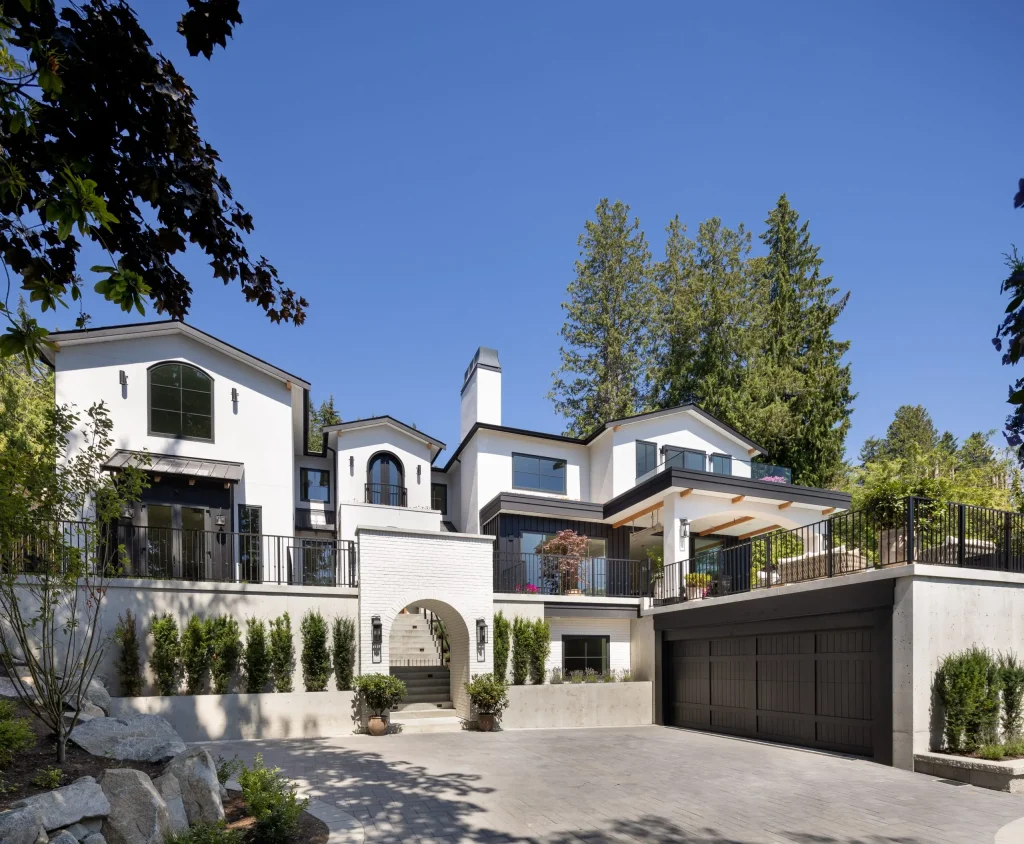
Custom homes in North or West Vancouver can cost roughly $600 to $1,200+ per square foot in hard construction costs. Once design, engineering, permits, landscaping, taxes, and contingency are added, a premium home can require an overall project budget of $3 million to $8 million or more. The site and the choices made during design can move that number considerably.
Why the Per Square Foot Figure Tells Only Part of the Story
Per square foot pricing is useful when you are starting to plan a custom home. It is not a complete budget.
The property itself can also change the cost. A flat lot and a steep North Shore site may have the same floor area but very different construction requirements. Excavation, retaining walls, foundations and difficult access can add substantial costs.
The level of finish matters as well. A custom home with standard finishes is very different from one with custom millwork, large glazing, premium appliances and imported materials.
Hard Construction Costs: What You’re Actually Paying For
For a quality custom home in Vancouver, hard construction costs may fall around $600–$900 per square foot. Premium projects, particularly those on complex North Shore sites, can reach $900–$1,200+ per square foot.
These are planning ranges, not quotes. The final figure depends on the site, structure, design, materials, labour and finish level.
What Hard Construction Costs Include
Hard costs generally cover the physical construction of the home, including:
- Demolition and site preparation
- Excavation, grading and foundation work
- Framing and structural work
- Roofing, windows, doors and exterior cladding
- Plumbing, electrical and mechanical systems
- Insulation and building-envelope work
- Flooring, tile, cabinetry and millwork
- Fixtures, appliances, lighting and painting
Landscaping can also become a major expense on a premium property. The final cost depends on the size of the outdoor space, hardscaping, planting, drainage and other site work.
What Hard Construction Costs Do Not Include
The construction rate does not automatically cover architectural fees, engineering, energy advising, permits, development charges, interior design, applicable taxes or contingency.
This is an important point when comparing builders. Two quotes can show a similar square-foot figure while covering different parts of the project.
Soft Costs: The Budget Category Most Homeowners Underestimate
Soft costs cover the professional and project expenses outside the physical construction of the house.
For a complex North Shore custom home, a planning allowance of roughly 25–40% of hard construction costs may be appropriate, depending on the project.
Common expenses include:
| Soft Cost | Typical Planning Range |
|---|---|
| Architectural fees | 8–12% of construction |
| Structural engineering | $25,000–$60,000+ |
| Geotechnical engineering | $8,000–$20,000+ |
| Civil engineering | $15,000–$35,000+ |
| Energy advisor | $5,000–$12,000 |
| Interior design | $25,000–$100,000+ |
| Permits and DCCs | $20,000–$80,000+ |
| GST | 5% of applicable construction costs |
| Contingency | 10–15% of hard costs |
These are planning figures only. A difficult site or highly detailed design can move them higher.
Contingency is especially important. It gives the project some room to deal with conditions that were not visible during early planning. It also helps to understand the roles of builders and architects before you hire for a custom home in Vancouver.
North Shore Site Premiums: What Makes Building in North and West Vancouver More Expensive
A North Shore property can bring challenges that are less common on a straightforward flat site.
Sloped Lot Foundation Premiums
Grade is one of the biggest variables.
A steep property may require additional excavation, engineered retaining systems, specialised foundations or drilled caissons. Geotechnical investigation may also affect the foundation design.
The condition of the land therefore matters as much as the size of the house when setting an early budget.
Environmental and Regulatory Premiums
Some properties require additional environmental or other specialist reports. Local development requirements can also affect the design and approval process.
These requirements can add both professional fees and time to the project.
Trade and Access Premiums
Difficult access can make construction slower.
Materials may require specialised delivery or lifting equipment. Limited staging space can also affect how trades work on site.
An early site assessment helps identify these issues before the design is too far along.
What Drives Cost Up: The Key Specification Decisions
The most useful cost conversation is not simply about square footage. It is about the decisions that shape the build.
Building Envelope and Structural Complexity
Complex roof forms, cantilevers, large openings and long structural spans require more engineering and construction work.
Large glazing packages can also increase the budget. They can bring more natural light and better views, but the window specification needs to work with the building envelope and energy requirements.
Kitchen and Bathroom Specification
Kitchens and bathrooms are expensive areas because they combine cabinetry, plumbing, electrical work, appliances, fixtures, stone and detailed finishes.
A custom kitchen with premium appliances and bespoke millwork will have a very different budget from a standard package. The same applies when a high end finish is repeated across several bathrooms.
Imported and Custom Materials
Imported stone, European cabinetry and specialty fixtures can quickly increase the material budget.
Lead times matter too. Some products need to be selected well before they are required on site.
Smart Home and Technology Integration
Home automation, integrated audio, security, motorised blinds and EV charging can all add to the project cost.
Planning these systems during design is usually easier than trying to retrofit them after the walls are closed.
What Drives Cost Down: Without Compromising Quality
Cost control does not have to mean choosing the cheapest materials.
Simpler massing: Fewer corners and a straightforward roof can reduce structural and labour costs.
Right-sizing the program: Building only the space your household will use can make a larger difference than cutting quality from every room.
Early builder engagement: Builder input during design can identify expensive details before they become site changes.
Early material selection: Identifying long-lead products early can help avoid delays and rescheduling.
Consistent specification: A clear and consistent finish level makes coordination easier and gives the budget a more predictable shape.
Design for construction: Good design needs to work on paper and on site. Early architect-builder collaboration can reduce constructability issues before construction begins.
BC Energy Step Code: A Cost Driver That’s Now Non-Negotiable
Energy performance needs to be considered from the beginning of a new-home project.
British Columbia has provincial energy requirements for new construction, while local governments can also set their own requirements and compliance paths. Vancouver, for example, has specific energy and emissions requirements under its Vancouver Building By-law.
For homeowners, these requirements can affect the building envelope, windows, mechanical systems, energy modelling and airtightness testing.
The practical lesson is simple: energy requirements should be part of the design and budget from the start. They should not be treated as a late-stage addition.
The Total Project Budget: Hard Costs, Soft Costs, and Contingency Together
Here is a realistic total project range for North Shore custom homes.
| Project | Approx. Size | Indicative All-In Budget |
|---|---|---|
| Premium Vancouver custom home | 3,000–4,000 sq ft | $3M–$5M+ |
| Premium North Vancouver custom home | 3,500–5,000 sq ft | $3.5M–$7M+ |
| Luxury West Vancouver home | 4,000–6,000 sq ft | $5M–$10M+ |
These are planning ranges only, not fixed quotations. Site conditions, design complexity, material selections and market conditions can move the final figure.
How Crave Homes Approaches Cost Management
At Crave Homes, cost management is about making sure the budget and the finished home make sense together.
That starts with early budget alignment. The intended investment gives the design team a practical framework before major design decisions are made.
Builder involvement during design can also reduce costly changes later. Structural details, materials and construction methods are easier to adjust on paper than after work begins.
Specification matters too. A premium choice should have a clear purpose. In some cases, the same investment can have a greater impact when spent elsewhere in the home.
The goal is a clear connection between what the homeowner plans to spend and what the finished house delivers. This is exactly what our portfolio reflects.
FAQs
What is the cost per square foot to build a custom home in Vancouver?
A quality custom home may fall around $600–$900 per square foot in hard construction costs. Premium projects can reach $900–$1,200+ per square foot. Design, engineering, permits and other project costs are additional.
What is the total all-in cost to build a custom home in North Vancouver?
A premium 3,500–5,000 sq ft home may require an all-in planning budget of roughly $3.5M–$7M+, depending on the site and specification.
Why is building in North Vancouver more expensive?
- Sloped sites
- Difficult access
- Foundation requirements
- Engineering
And additional regulatory considerations can all increase the cost.
What are soft costs in a custom home build?
They include
- Architecture
- Engineering
- Energy advising
- Permits
- Development charges
- Interior design
- Applicable taxes
- Contingency
How does the BC Energy Step Code affect construction costs?
Energy requirements can affect the building envelope, windows, mechanical systems, energy modelling and testing. The exact requirements depend on the jurisdiction and project.
Is a larger custom home cheaper per square foot?
Often, yes. Some fixed costs are spread across more square footage. That does not mean the larger home costs less overall.
What are the biggest cost drivers in a luxury custom home?
- Structural complexity
- Premium kitchens and bathrooms
- Imported materials
- Difficult sites
- Large glazing packages
and integrated technology can all affect the budget.
How much should I budget for contingency?
A planning allowance of 10–15% of hard construction costs is commonly used for complex projects. The right amount depends on the site’s risk and the project’s scope.
Does land cost affect the construction budget?
Land and construction are separate expenses. Both need to be considered when deciding the total investment available for the project.
How does Crave Homes approach cost management?
The focus is on
- Aligning the budget early
- Involving the builder during design
- Coordinating closely with architects
- Making specification decisions with the complete project in mind
Start the Conversation With Crave Homes
The best time to understand the cost of a custom home is before the design is finished.
A realistic budget gives you something useful to design around. It also makes decisions easier later, because you know which choices fit the project and which ones may need reconsideration.
Crave Homes works with homeowners and architects to turn custom designs into carefully built homes across Vancouver and the North Shore.
If you are considering a custom home in Vancouver, North Vancouver or West Vancouver, start with a conversation about the property. Tell us about your plans and the level of investment you have in mind.